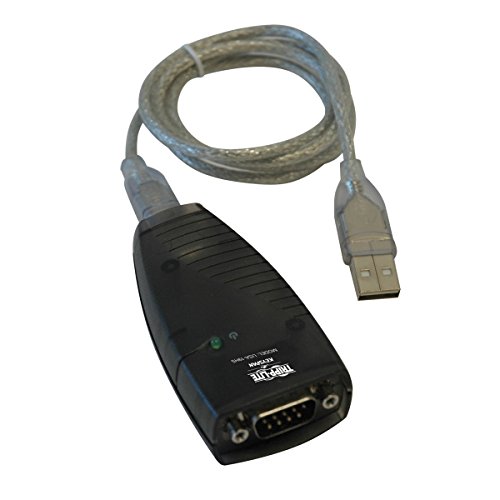

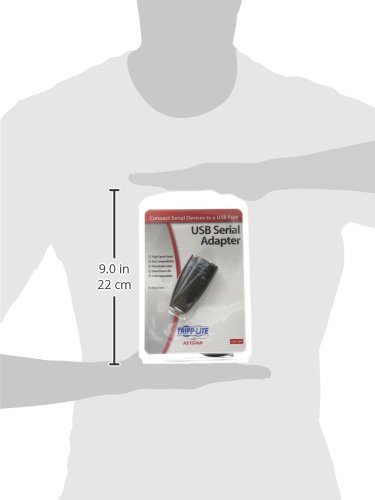

- Serial adapter allows a serial device to be connected to a USB computer
- Plug-and-play convenience:DB9 serial port is seen as a COM port by your computer, and is available for use by any program that accesses COM ports
- No need for an external power adapter:draws power directly from your computer via the USB connection
- DB9 serial port supports data transfer rates up to 230 Kbps:twice the speed of a standard built-in serial port
- LED shows adapter status and data activity at a glance
-
Information
-
Twitter
-
Pinterest
-
Youtube
-
Facebook
Maani Khan
So far, So good!
This worked to communicate with an old Haas VF0 cnc milling machine. Replaced an old computer that had a native serial port. I used it with Windows 10 on a new desktop and on an older thinkpad. I didn't install the drivers from the supplied disk. I just plugged it in and windows automatically installed the drivers. I checked the device manager to confirm which port it was plugged into, opened the DNC software, set the proper com port, and that was it. Worked just like the old serial port. Now, I have not used it to drip feed a large program yet, as the ones I've been sending have all fit into the machines memory, but so far transferring programs from pc to machine has been flawless. I'll store the old computer with the native serial port until I confirm the drip feeding works 100%.
Paul Seyb
Not Frustrating like the rest
USB Adapters are frustrating. Some work, some don't, and some only work some of the time. I've had a variety of USB-Serial adapters, and the mixed bag of results, makes this one a refreshing change. It came with software, but I didn't need it. Just plug into the USB port, and it downloaded the proper driver straight from Windows Update. It just worked! It's a sturdy construction, and comes with the USB cable. The cable isn't incredibly long, so if you need to reach, you might bring another for longer distances. There is a light on it to let you know when it's connected, which is very handy, and the port that is created on the computer shows the Keyspan, so you don't need to pick trial and error until you have the correct port. This is powered by the USB port, so you do not need any kind of additional battery. Very happy with this, and I strongly recommend this to anyone who has a need for a USB to Serial Port adapter.
Harsha Mehrotra
Worth the extra cost compared to cheaper units
I have used several different cheaper adapters that use the common Prolific chip and drivers. All of them have had spotty results, compatibility issues with various versions of Windows and MacOS. However the Keyspan USA-19HS has always worked perfectly for me, requiring no driver installation on Windows XP, 7, 8 and 8.1. Even though this unit is a little more expensive that the others, I highly recommend it. One of the cheaper adapters I purchased would only work with drivers that were designed for Windows Vista, and even though I was able to make it work by installing that driver on my Win 7 box, as soon as I unplugged it and plugged it in again, the Vista driver was automatically over-written by the Win 7 driver, and the adapter stopped working. One serial device I own (a security alarm controller) came with the recommendation to use this Keyspan adapter for USB connections, and I have found that this is completely true. No other adapter works with that device. An additional benefit of the Keyspan device is that the USB cable unplugs from the adapter itself - using a standard USB cable that can be obtained in many different lengths. This can be a big help in managing cabling between the adapter and the computer.
Jason R Rupe
The preferred option for Macs.
This is pretty much the only option you have if you want a serial port (RS232) for a modern Mac. Many other options work for Windows based machines, but several that I tried on a MBP 15 retina didn't recognize or have drivers. Keyspan does and it works well. This is a _must have_ if you need to connect to Cisco, Juniper, PA, HP or other telecom gear through the "CONSOLE" port to setup, recover passwords or manage. If you have a Mac you'll need a terminal emulation program. SecureCRT is the standard, although it's a bit pricy. You can probably use minicom or something else for serial, but SecureCRT offers telnet, SSH/2 and serial options and maintains the keys for convenience. A perfect combination.
Becky Elaine Lathan
For That Which Is Old Makes New Again!
Works beautifully with the older version 3.2.3 RT Systems programming cable and software for Yaesu's VX6r. Computer is running 64-bit Wndows 7 home premium. Installed the Keyspan included driver software then set the baud rate in Windows (Control Panel->Device Manager->Ports->Keyspan USB Port->Port Settings) to 1200 baud and chose the shortest block size. Download from radio to PC to test the connection before trying to load a large amount of programming data into the VX6r. There is a single LED status light that let's one know when data flow is occurring.
Krystal Brewster
Works Flawlessly!
I have a vinyl cutter that was designed to work with Win98 via a serial port. After many years of use the hard drive went down in my old laptop. I updated the software in order to get a later version of Windows to see the USB security key that unlocked the vinyl software. I had to adapt the serial port on the Vinyl cutter to a USB port because my new Laptop does not support a serial port. After reading many reviews on various adapters I decided to go with the Keyspan - Tripp Lite USA-19HS. I installed the software then attached the adapter to the computer USB port as per instructions. Windows found and installed the software. Next I used the Keyspan Serial Assistant (located under the Start menu after installation) to identify the com port to which it was assigned (com 4 in my case). I then started my program set the com port to match Keyspan Adapter and it works perfectly. My vinyl cutter is approximately 15 years old and I can’t imagine the Keyspan adapter not working flawlessly with newer technology as well.
Eric Jay Sanders
Recommended for people running a swim meet with a Colorado Time Systems CTS-6 console...
Works great to interface with a Swim meet timing console (Colorado CTS-6) that only supports a serial interface from a very picky piece of software called Meet Manager. Tried several other cheaper convertors, and though some of them could connect to the timing console, none of them could reliably transfer times without getting errors from Meet Manager. Having used the software on an older PC that still has a serial port, I was pretty sure the convertor was the problem. Sure enough, this USA-19HS solved all the issues - it reliably connects and doesn't throw any errors.
Ibothoi Mangang Sanasam
Ultimate device for adding serial ports to a computer
Yes, there are a million different USB-to-serial port adapters out there. But this is the only one I've found that always works, all of the time, no matter what I'm plugging it into. Many of the older (bargain) adapters out there have trouble or don't work at all with 64-bit versions of Windows. The USA-19HS always works. The software that KeySpan makes available for configuring and monitoring traffic is also very handy for troubleshooting connections. You can see exactly what is happening -- what data is being transmitted and received, and what the various handshaking lines are doing. I haven't seen any other product that will do that. It may be a few dollars more than other adapters, but in my opinion it is totally worth it for its reliability and diagnostic capabilities. I've purchased several of these for those very reasons.
Keith Wages
Perfect Solution for My Update
Effortless connection for my old Serial/Parallel port vinyl plotter. I have a 2000 model year Vinyl Express 32" vinyl cutter that that had only a serial port connection. With this adapter, I was able to upgrade my machine to USB connection on a Windows 10 laptop. It was very simple once I updated my old Win 2000 software, the Vinyl Express software and then added this port converter so they could talk. I didn't need anything more, even the CD was included with a driver that worked perfectly. Don't give up on old serial port equipment if it still works well. This is a reliable and inexpensive solution. The connector takes a standard USB cable connection just like your printer has. A 3' cable is included but since the adapter is independent of the cable, not molded together into one piece, you can use any standard USB cable to achieve the length you need. Highly Recommend!
Bronson Kittler
Still the best.
I have been using a Keyspan adapter for 10+ years and I still have my original one that works exactly like the day I bought it. The reason that I used it is for a lack of remembering the details was that I had two computers that I had to communicate with and one had an odd baud rate--- the Keyspan adapter was the only one at the time that worked. From there and a number of years forward, I ran into something else and it was very interesting. This time it was a very picky, expensive, and unique industrial VFD that up to that point everyone thought an Allen Bradley USB to serial adapter was the only choice.... I grabbed my Keyspan and on the spot proved that their $350+ adapter was not so special. So that is where I bought another for work. I have my personal unit that I still carry with me all the time, but when I go to program PLC's and they have to be initiated for the first time.... this was my first and only choice. If you think this is a bit pricey compared to others--- all that I can say is that it works on anything that I have tossed its way for over 10-years.