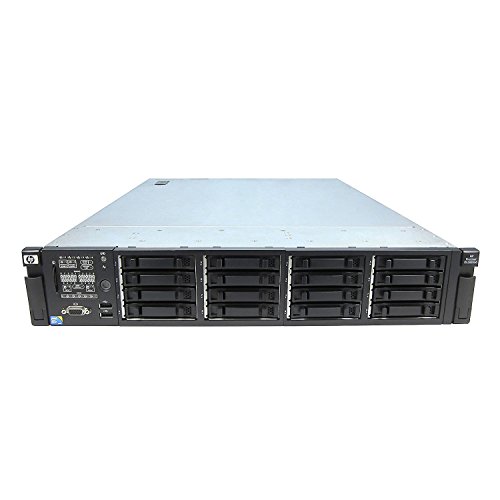
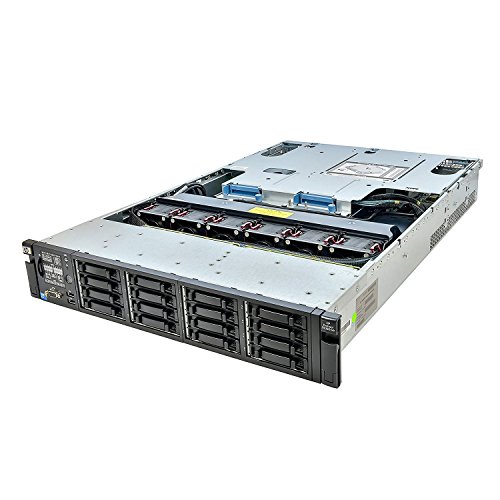
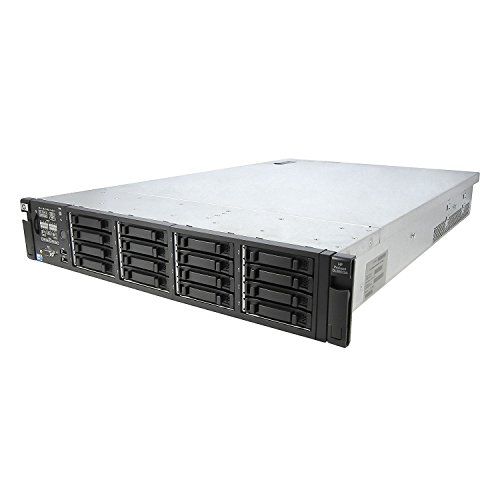
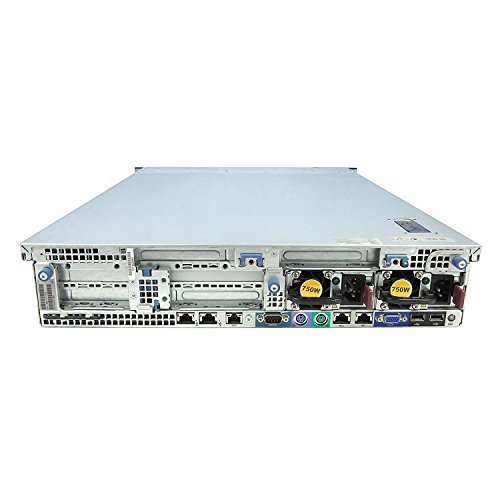

- HP ProLiant DL380 G6 16B Server
- 2x 2.53GHz Intel Xeon Quad-Core E5540
- 24GB RAM / 2x 73GB 10K SAS Hard Drives
- P410i w/ 256MB
- No Operating System
-
Information
-
Twitter
-
Pinterest
-
Youtube
-
Facebook
Melanie Timothy
Great server for a very affordable price!
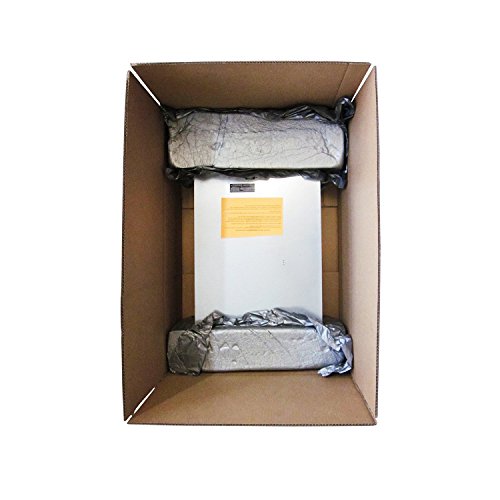
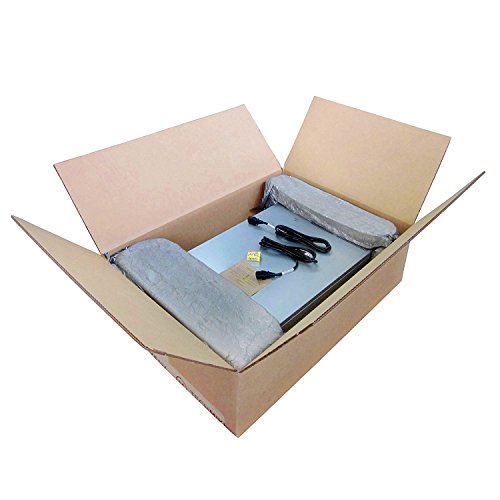
Came very well packaged. No damages at all and for a used server even the exterior is in great condition (if that even matter since it's just going in a rack anyways). Best bang for your buck server I've had in a long time. 10/10
Eihg DeeCee
Love it
Absolutely awesome buy. The dell's that were comparable were about 3 times the price. I was unsure if this would be legit but it is and it's awesome. You can tell that the company took care of these. There is not dust at all. For anyone reading this is a generation 6 like it says in the title not in the description. I bought this to use as a virtualization server. I will be upgrading this to the 6 core x5670 soon.
Brittany Easley
VERY good value, great server
Unbelievable value. The server arrived in great condition, well-protected in a sturdy box. Specifications were just as the unit is described, and actually working with and using it has been a joy. It's been very reliable, quite fast, and has tons of room for expansion (it'll hold 16 disks, loads of RAM, half and full length PCIx cards and the CPUs can be upgraded too). Note that to get 16 disk slots (instead of the 8 shown) you'll need to contact the seller and ask whether they'll swap out the optical drive for the second 8-disk bay. Ask before you order so everybody's expectations are set :) As of this writing, the largest 2.5" disks I can find are 5TB (!), which means if you've got the money and inclination, you can cram 80TB of storage capacity into this 2U machine. It's got enough horsepower to drive it properly, too. Minor caveats: its cooling fans are loud, especially under heavy load. That's to be expected for a 2U server, but in case you're thinking of using this in a home lab or as a desktop replacement, be aware of the noise. Its iLO2 lights-out management tools are functional, and there's even some keys "floating around" online to unlock the advanced features, but beware that it's old web-based stuff and things like the virtual console and virtual media manager require antique web browsers & Java and aren't likely to work on a modern system.
Chauntal Pike
Five Stars
Good
Kristal MacKenzie
Second system as stunningly pristine and functional as my first from PC Server & Parts
HP Proliant DL380 G6 Two Quad Core E5540 2.53GHz 24GB RAM P410i 2X72GB This is now the second server that I have ordered from PC Server & Parts, this is a great little (relatively!) server for someone that is just setting up a home network for the first time. The price was the deciding factor for me between HP, DELL or IBM/Lenovo as I have a VERY tight budget being unable to work; my whole network is a present from a friend who I helped out with a project of his earlier this year. Even though this 2009 server build may be a way outdated by computing standards (Moore's Law), it provides me with an entrance to having enterprise quality hardware to learn on without the massive costs of current Gen 9 and Gen 10 server hardware. This came in EPS foam packaging that kept the server nice and safe on it's long journey to me (~3,000 miles), this server was a bit easier to extract from the packaging than my first server I purchased from PC Server & Parts - HP ProLiant DL380 G6 2U 64-bit Server with 2xQuad-Core E5540 Xeon 2.53GHz + 16GB RAM + 8x146GB 10K SAS HDD, RAID, NO OS and came with 2 power cords just like the first server. From the main picture I was expecting the same configuration of drives bays but was happily surprised to see that I had 16 SFF drive bays instead of the 8 my primary server has, it came with the advertised 2 x 72GB 10K SAS drives in caddies and also included 6 drive blanks in place leaving me 8 open bays to cover until I can afford a few extra drives. The 6 high speed cooling fans were all pristinely clean with zero dust on them, as were the CPU heat sink and other internal system components. There are some scratches/scrapes on the servers case, not unexpected but nothing to worry about (like wrinkles on a human as they age) as they are cosmetic only and will be hidden from view for the most part... Upon opening this server I noticed the same lack of dust bunnies and/or whales that my first server also lacked, this server has a different baffle configuration than my first server has; this is due to the manufacture date being ~1 years-ish apart as both styles are listed in documentation with correspondingly differing dates of issue by HP. Taking off the riser card cage I noticed something very different from my first server, a large card in slot 0 with 4 cables attached to the front 16 SFF drive bays and 2 more from it to the Motherboard, whereas my first has 2 cables attached from the Motherboard to the SFF bays. The card is the HPE 24 Bay SAS Expander Card (P/N: 468405-002 HP 468405-002 PCIE SAS EXPANDER CARD 468405-001 487738-001 - No cables) that also has an external Mini SAS 4x connector for attaching to tape drive/library/auto-loader/etc... It also came with the upgraded dual bay controller version of the p410i hardware RAID controller as part of the 16 bay SFF cages, as another bonus there was a 512MB RAID cache card in place instead of the advertised 256MB cache card; that saved me from swapping it out for the backup 512MB cache card I have on hand (courtesy of PC Server & Parts). I noticed that there was a crimp on the wire for the BBWC, it looks like a board that was removed from the riser was pinching it; there is no damage to it's functionality though as the battery was recognized and reached full charge in ~1 hour or less. Speaking of boards it looks like there were at least 4 boards that were removed from the riser card leaving some open slots in the back, this is not too big of a deal as I have quite a few slot covers hanging around my computer lab. Then I decided to check the CMOS battery as the first server had the CMOS battery arrive DOA, not unexpected nor was I unprepared as I have spares on hand, I pulled out my voltmeter and read 2.96v; just a little below the minimum acceptable 3.0v so I popped in a new CR2032 and read a nice 3.2v after installation. This one did not come with a DVD drive installed as it has the 16 bay option, the only way to boot is via (in order of precedence) the Motherboards' integrated SD slot or internal USB 2.0 port (collectively called C:), external USB 2.0 ports (2 in front 2 in back), 72GB RAID drive, PXE NetBoot. There are the standard assortment of ports on the back for this class of server, including PS/2 ports for KB and mouse instead of the more modern adoption of the USB for said devices. This came with redundant 460w power supplies, replacement(s) as the BIOS log shows that at least one power supply went bad on it. The last thing before buttoning up the server was to make sure all the wires were out of the way and place the pci riser/air baffle back in place making sure to tighten the 2 screws that hold it in place, that's when I noted that the allen key was not on the back of the server in it's little clip nor was it in the box and packaging; not a big deal as the other one does have it included so I used that one. The cover both released smoothly and went back on smoothly with no force needed in either instance, I then latched it then hit the power button to fire it up with the usual and expected 747 taking off symphony from the 6 high speed fans that are installed. There are 6 sticks of 1066MHz ECC RDIMM RAM installed at 4GB each stick for a total of 24GB RAM, this leaves me a LOT of room for upgrades as there are 6 more slots still available for me to install more RAM in the future. The CPU's are properly identified as 2.53GHz Xeon quad cores for a total of 8 physical CPU's and 16 via Hyper Threading, these also have Intel Virtualization so that I can run VM's. That's about it for the inspection, now is the installation, testing and operation of these servers; more on that later after I give them a thorough burn in and stress test... I'm currently installing an OS or ten to see which ones I like best then narrow it down and get my lab up and running
Marsha Robinson
couldn't have bought a better system used at the price I got it
It got here early and it works perfectly, couldn't have bought a better system used at the price I got it.