

- plastic
- Imported
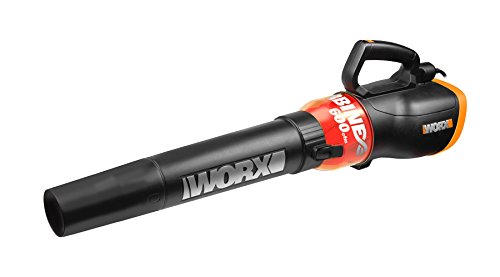
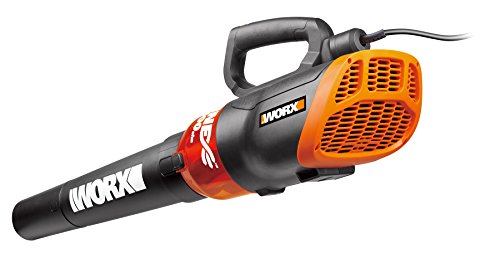
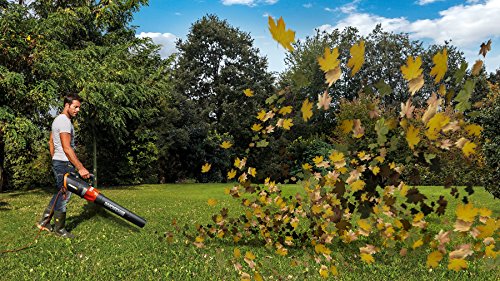
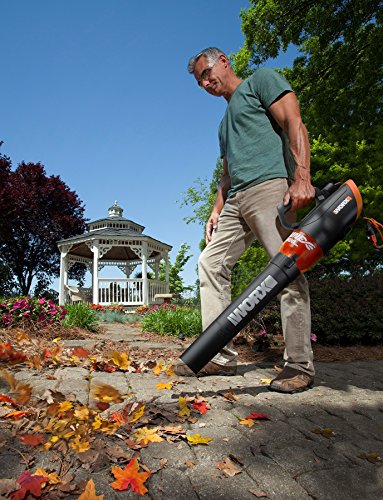
- TURBINE fan technology delivers forceful, high-capacity air volume that is up to twice as fast as professional gas blowers
- Dynamic airflow design and Hyper-Stream nozzle for maximum performance, variable speed control to adapt to your outdoor cleaning challenges
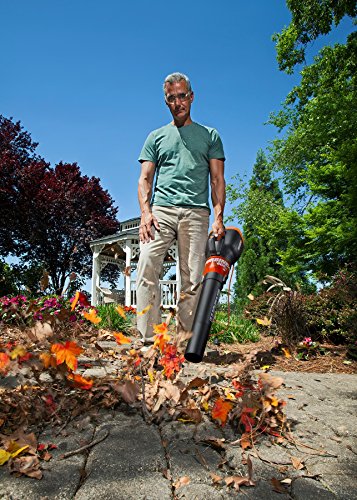
- Very lightweight at 6.4 lbs. to easily control with one hand without getting fatigued ,Rated power- 12 amps
- Power cord retainer for hassle-free leaf blowing
- Includes manufacturer’s 3-year warranty
-
Information
-
Twitter
-
Pinterest
-
Youtube
-
Facebook
Vivian Silvera
CFM matters most & boy does this thing put out!
(600 CFM model) i have not had to deal with a blower until now. one of the first things i found when looking, searching through blowers online was to notice most sellers focus on 'air/wind speed.' problem for newbs like myself was figuring out which would work best and what mattered in the details. so SPEED as i found is not even close to be the most important factor. rather the most important factor being CFM or how much air comes out the end. an easier way to visualize is to think of a garden hose on full blast as compared to a 12" pipe. even flowing much slower the wider pipe pushing out more air gives you the most bang for your proverbial buck. so with that in mind i totally ignored all the over-hyped air speeds most put front and center in the product descriptions. most of those omitted any mention of CFM output because if they did nobody would buy them. so instead i looked at output only and having used worx products in the past finally went with this the 600 cfm model. i arrives with but three parts, the cord, a tube extension and the blower unit. the blower has a nice thumb controlled wheel up front for adjusting output. it can go from super slow barely enough to move anything to full speed with enough air coming out in force to blast 1.25" gravel off the walkway as if it was little more than grass clippings! on first use i was able to clear the walk of ALL debris, leaves, wood mulch, twigs, landscape gravel. next went down the path where the gravel had gotten into our grass and blasted it out and back where it belongs. absolutely could not be happier with!
Weng Salvador
Best Blower Ever!!
Tracey Hulsey-Sykes
powerful leaf blower
It is very powerful and light weight. I am 76 years old and I can handle it with ease. I use it to blow under the refrigerator, stove, behind the piano the ceiling, the heating vents any heavy furniture i blow under and behind. Then I pick up the dust with the sweeper. I feel like my house is really clean when I am finished. I used it first in the house before my husband got a chance to use it in the yard.
Watonia Downing
This sucker BLOWS!
Let me just say...Oh My Goodness! This is what I'm talking about! I gave this blower to my Dad for his birthday. I unboxed it in the kitchen and assembled it in all of two minutes. It does have some heft to it but it is very well balanced and not a problem to use one handed. We were anxious to check it out so I plugged it into a socket in the kitchen. It almost blew stuff off of the walls and my ears are still ringing. Well, I did crank it wide open just to see what it had. It sounds like an old Electrolux vacuum cleaner on steroids. Don't get me wrong here. It's not too bad outdoors. After all, if you are going to move that much air you're gonna make some noise. I believe this blower has as much juice as our gas backpack leaf blower. Only it weighs a fraction of the gas unit. I will be wearing hearing as well as eye protection when using this bad boy. It is a great blower for what I believe to be a very fair price. It does have a 3 year warranty so as long as it holds up I will be thrilled with this purchase. I highly recomend this product.
Desirae Beck
It Worx great!
Our home is surrounded with old large leaf trees so when in fall there are a LOT of leaves to clean up. This blower has no problem handling the job and I don’t use it at max power. I only use the max output when I get the edge of the yard to really push the leaves into the woods. This blower is impressive. It’s light, especially compared to the blower it’s replacing. It’s relatively quiet. I can run it for a couple of hours without hearing protection and don’t have any ringing in my ears later like I did with the old blower. I do recommend using hearing protection. It is powerful. Look at the CFM when comparing. You can probably blow through a straw and get 200 mph air speed but that’s not going to move leaves or debri. It’s the volume of air that does the work. It’s like torque for an engine. 6 month update: I’m still impressed with the performance of this blower. I never use it at max to move leaves across the yard but when I do at the edge of the woods, everything moves. This blower picks up matted pine straw and leaves that have been in place for years. I haven’t tried all the blowers on the market but this performs so good that I’d recommend it to anyone.
Doris Aiken
This really blows
Fagbohun Kazeem Olawale
Buy this one, forget the rest
This is the most powerful handheld electric blower available. If you're serious about getting the job done quickly, this is the baseline. The next power tier is a gas backpack blower at five times the cost, then an even more powerful backpack, and then four-digit specialty tools from companies like Billy Goat. I bought the Worx because I didn't want to spend three hours raking a half-acre of grass. My trial run was an hour of continuous use with matted wet leaves and driveway sand. It fast became apparent that to be efficient, a blower has to move leaves without being on top of them. Blowing from six inches just makes everything scatter as piles build up. You end up crisscrossing the section you just cleared to deal with the strays. The further your breeze carries, the more direct the flight path of the leaves. This range, and the ability to scour stubborn leaves from the ground, comes from air speed (MPH). At the same time, though, you need a big enough wall of air to move more than one leaf at once. That comes from the size of your pipe opening. The two in combination determine your total air volume over a given duration, or CFM (cubic feet per minute). In physics-land (with spherical cows and turbulence-free pipes, spared from the icy hand of marketing), CFM is the best measure of a blower's power and work capacity. MPH, you can change by varying the size of the pipe; a smaller pipe makes a smaller column of air moving at a faster speed (and more impressive advertising), which is why a lot of consumer-class blowers have tiny nozzles. (I'm looking at you, Sun Joe SBJ601E.) CFM stays the same regardless of nozzle size. In theory. In practice, trying to cram air quickly into a tiny hole tends to reduce CFM, so blowers that optimize for speeds over about 150 MPH tend to be less efficient relative to their fuel or electricity consumption. Still, if you know either value and the size of the pipe, you can calculate the other (assuming the manufacturer isn't misleading you by quoting CFM at the fan and MPH at the end of the pipe). To get CFM from MPH and the radius of a round pipe, the calculation is (radius^2)*(mph)*(1.92). That's (1.69^2)(110)(1.92) for this blower's 110 MPH and 3 3/8" pipe, with the result arriving right at the rated number of 600 CFM. Anyway, the Worx has enough volume and speed to blow mounds of wet leaves from six feet and dry ones from ten or more. It's impressively powerful. I was switching arms every few minutes as they wore out from the backward force. Only some really baked-on mud would have benefited from a pipe-reducer attachment. Thanks to ape-like proportions or the secure fit of my spandex leaf-blowing onesie, clothing suction from the rear-directed air intake hasn't been a bother. ALTERNATIVES: I almost bought Toro's highly-rated "Ultra" combination blower to minimize bagging, but the vacuum functionality didn't seem that useful in videos. Maybe it'd be adequate to clean an enclosed deck area or a small yard with a scattering of dry leaves. For a larger yard, it looks like a time sink relative to a standalone mulcher. Likewise the blowing capacity, which, at 410 CFM, trails the Worx by quite a lot. Cordless tools were also tempting. There's a 20V DeWalt people seem to like that's rated at (a perhaps optimistic) 400 CFM. Because it's a similar design to the Worx, we can compare power directly. DeWalt's standard battery is 20V (or so we'll stipulate; it's closer to 18V under load) and 5 amp-hours, so we're looking at 100 watt-hours total output. 15 minutes of runtime translates to a sustained draw, best case, of 400W. Assuming 90% efficiency in the brushless motor, that's 360W actually moving air. (When new. Expect a performance drop over time and battery replacements by year three.) Compare this Worx: 12 amps at 120V equates to 1440 watts sustained, in this case feeding a 2-pole AC/DC motor that's perhaps 55% efficient. 12A is close to the maximum a household device can reasonably expect from a typical 15A socket. Even with nearly half of our power lost to heat and noise, the remaining 790W is over double what the DeWalt can manage: at any given moment, the Worx is doing twice the work. Things go pear-shaped when you try to equate power and blowing efficiency across disparate fan types, but for like designs, there's no two ways about it: current batteries can't compare to a fully-leveraged power socket. And what of gas blowers? The handheld versions have around 1 HP with CFM from 450 to 500. They're usually tuned for higher MPH than the Worx, so they're likely to be a little better with wet leaves and a little worse with dry ones. Backpack blowers up the displacement and make between 1.5 and 5 horsepower. The models that you might find on the back of a professional landscaper can manage nearly 1000 CFM with speeds around 200 MPH. That's a considerable difference, but you pay for it at the checkout and in weight: figure 10 pounds or so for a handheld (relative to 7ish for this unit, plus some cord) and 20 or more for a backpack. ACCESSORIES: * A motor this powerful benefits from a thick (low gauge) cord for longer runs. You lose a bit of performance with thinner cord. The generic orange 50-foot extension everyone has is 16-gauge. Feeding a 12A load for 50 feet, it'll have a voltage drop of about 5V. Heavier 14-gauge loses 2.5V on the same run, and industrial 12-gauge, only 1.5V. The scale is linear, so if you double up that 16-gauge cord for a 100-foot run, you'll lop off 10V. How's that play out here? From a short and fat cable (that the cheesy plastic strain-relief piece won't actually accommodate; just tie an overhand knot over the two plugs instead), we'd expect a 1440W draw (12A * 120V, or a bit less because the house wiring itself has some drop). Losing 5V drops the total to 1380W. That's about what I found when I tested the Worx with a watt meter. 12ag / 3 ft = 1423W 14ag / 100 ft = 1352W 16ag / 50 ft = 1351W 16ag / 50 ft + 14ag / 100 ft = 1280W With the progressive thumb dial at the lowest setting, minimum draw was 260W. For shorter runs, disconnect extensions you don't actively need. Every cable sheds a percentage of the energy it carries to heat. As above, skinny cables lose more. Coiled on the ground and coupled with a high-load device like the Worx, they can build up enough heat to start melting insulation, which tends to cause sheepish expressions and insurance claims. * It's loud. Loud enough to merit hearing protection. On an A-weighted scale (approximating human hearing), it makes 82 dB on low and 91 dB on high, outdoors from three feet. Indoors or near a boundary wall, volume jumps by 10 dB and subjectively doubles. While the sound character emulates a vacuum, my Shark only measures 72 dB indoors; you'd have to run over a rat's nest of lamp cords to make one this loud. Amazon has a number of comfortable muffs for less than a Jackson that'll keep your ears intact. You can find electric blowers with more toys, but none that'll get the job done as fast as this one. It's a bargain at the asking price. I'll update if I catch any reliability problems.
Robert Niles
Amazing Blower/Very Light Weight
We use this for details at our car wash. It's very light weight/made really sturdy and can blow the water effortlessly off cars. Love it!
Zaini Asma
An Absolutely Amazing Blower--It Will Cut Your Leaf Bagging Time By 90%
This blower is fantastic! I'm amazed at its power and the very low price. I have a large, challenging back yard which fills up in the fall with pine needles , tiny locust tree leaves and maple leaves. I was blown away (no pun intended) by the ease with which this blower handled pine needles which are notoriously difficult (actually impossible) to move with my old blower and which clog up my rake every 30 seconds. I spent no more than 25 minutes in my large back yard blowing all the leaves, needles and miscellaneous little detritus into one big pile in the corner and another 10 minutes bagging it. Easy peasy !! It cut my raking time down to perhaps five minutes. Even better, the easy power control spin wheel allowed me to back off the blower and clear the leaves off my mulch without blowing it away. This machine is the best deal ever. I bought my daughter and son-in-law one the same day I used it because they have the same challenging back yard I have.
Sijo S Karthi
A blast of fresh air!
What I like: -Very small. This product takes up virtually no space in my garage. It's light and easy to hold through long jobs with no problems. -Hurricane powerful. This thing blows leaves across my big yard, and cleans my garage in a minute or two. I've used the larger, gas powered blowers and this is pretty much their equivalent. -Comes ready to use! Clip the nozzle on the motor, and it's good to go. About 3 seconds to assemble. -Uh, crazy super inexpensive. I've owned rakes that cost more. -Two speeds: close to the leaf pile and far from the leaf pile. What I don't so much like: -In a perfect world, this would have a more secure method of securing your extension cord to the blower. (Yes - you need an extension cord to use this product). After all, you drag it around your yard all day, and it's a bit of a pain to keep re-connecting the cord when it comes loose. This is easily remedied by holding the cord in your hand holding the handle or looping it around the blower. Still, it could be slightly more perfect.