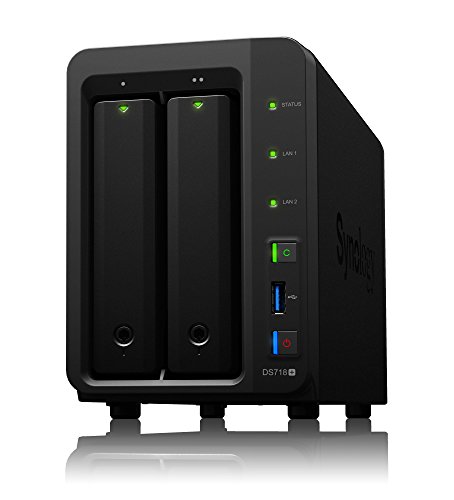

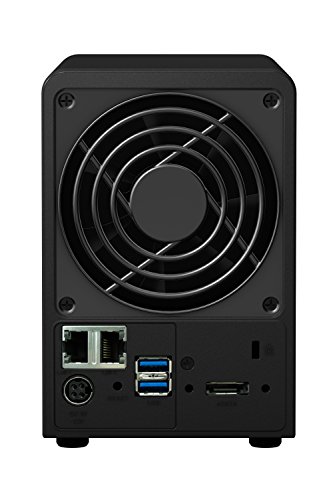

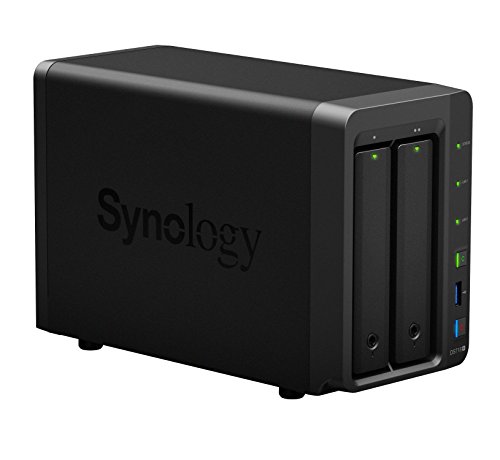


- 2 GB DDR3L-1866 memory (scalable up to 6 GB); Scalable up to 7 drives with Synology DX517
- Quad-core processor with AES-NI hardware encryption engine; Dual 1GbE LAN with failover and Link Aggregation support
- Encrypted sequential throughput performance at over 226 MB/s reading and 184 MB/s writing
- Advanced file system offering 65,000 system-wide snapshots and 1,024 snapshots per shared folder.Two channels H.265/H.264 support 4K video transcoding on the fly
- CPU Frequency:Quad Core 1.5 burst up to 2.3 GHz. Maximum Concurrent CIFS/AFP/FTP Connections-500. Maximum Connections- 20.Maximum Single Volume Size: 108 TB
-
Information
-
Twitter
-
Pinterest
-
Youtube
-
Facebook
Carmelita Russiana-Catubig Lisondra
Easy migration from old NAS
My old DS212, which has been running 24x365 for six years, with only a disk upgrade to bigger disks a couple of years ago, finally turned up its toes and died. It holds the Timemachine backups for three MacBook Pros, and the video capture from my security system, so I really wanted it back in action quickly. I ordered the replacement (latest version) from Amazon with free next day delivery. Not the cheapest option, but certainly fastest and easy returns if anything doesn’t work. It arrived at 1pm today. I pulled the disks from the old device and inserted them in the new. Really not holding out much hope that I would be able to recover the data. The online utility to find the new NAS found it within a few seconds, connected to it, and it told me it saw two drives from a DS212 system and asked if I wanted to migrate them. Literally 10 minutes later, it was back up and running with the same configuration and data, but somewhat faster with the new hardware. I was really surprised how easy and fast Synology made the whole process.
Laura Harris
This thing is great!
This is a powerful little box that does just about everything you could ever need. Not only does it happily serve up all my files over the network, it does it fast and with every protocol I've ever seen. SMB? Check. iSCSI? Check. NFS? FTP? Rsync? Yup. With the ability to run virtual machines (and Docker containers!), I was able to have it take over my power-hungry PC running 24/7 as well as a remote VPS VM I was paying for. It'll eventually pay for itself with power savings and the monthly cost of the VPS. The interface is great. Very easy to use and very clean. It offers tons of packages you can install to provide various services to your network. Customer support, while maybe not super fast, is also great. They were able to remotely fix an issue I had come up with the virtual machine manager. This model (DS918+) can also utilize 16GB RAM, even though it's not officially supported. I highly recommend upgrading the RAM if you plan on running virtual machines. I did some research and found most people recommended this kit: Crucial 16GB Kit (8GBx2) DDR3/DDR3L 1866 MT/s (PC3-14900) SODIMM 204-Pin Memory - CT2K8G3S186DM. I installed it without issue and it's been working great. So far I am very happy with this purchase.
Janet Castillo
Well worth the wait...
After the announcement of the 918+ earlier this year, I put my planned purchase of a 916+ on hold because I wanted the dual NVM SSD drive support for improved caching/performance. Picked this up along w/ the 4GB memory upgrade and 4 8TB IronWolf Pro drives. Had the hardware up and running in less than 30 minutes. Installation was a breeze, went with SHR-1 to get the most space while still benefiting from striping. Took awhile for the initial parity check to complete, but all drives checked out. Been using the system for well over a month now. My Macs back up to it using TimeMachine. I've got CloudStation Sync running to have an auto-synchronized folder shared across all systems. I have the VPN setup so I can log in while on the go and access the server. I use PhotoStation to centralize the family photos and make them available for web browsing and sharing w/ friends and family. With remote DSM enabled, I can log into the box externally and upload/download files via the web, even from organizations that normally block standard file sharing sites. Honestly with the DSM software this NAS can do so much more than what I have planned for it, but it has absolutely performed as well as I expected. Even with the IronWolf Pro drives which many report to be a "noisy" drive, this system is extremely quiet and I never hear it running. It is so quiet, in fact, that I changed the fan settings to run all the time to keep the drives cooler and I still don't hear it running. Reading other reviews I noted that one person saw the blinking blue light on restart w/ no apparent activity - it is important that you give the box time to start up. That blinking blue light means the system is starting but is in the process of verifying the drives, such as the striping, etc. It can take quite awhile for this to complete, especially when you have larger drives and more TB, and by awhile I mean it can be many hours. Just have some patience and give the box the time it needs, that is how you ensure the system is ready and you won't suffer data loss.
Sam Holder
Great device, easily upgrade from 216+II
I upgraded from the 216+II that I bought only a week ago, not realizing this was about to be announced. Still finding my way but I can't say enough about how easy to setup and use these are. PLEX: Right now you need to install the Plex app manually, which is easy. You download the Synology package from the Plex website, Intel - 64-bit (DSM +6.0), and then select manual install in the package manager on Synology and choose the package you downloaded. Super easy. UPGRADING: I pulled the drives out of the 216+II and put them straight into the 218+ and it fired right into a migration tool. No data or user account loss. I had to manually setup the Connect.to and dynamic DNS again to point to this new box, but recognized that I had a new box and removed the old one from the record. YMMV, but very straightforward.
Emily Gualberto Kempis
Setup was easy...
I’ve attached a few pics, nothing to outrageous here, it’s a 4 bay NAS (that can be expanded to 9 drives). Kind of a light weight feel to it, plastic frame and hard drive housings, but later when it’s loaded with drives the weight savings was appreciated. Along with drives, I also installed a M2 NVMe drive for cache set up. Later when setting it up you see that a solo cache SSD maximizes the read speed, to get the best performance for read and write tasks you need to have 2 SSDs for caching. I’ll need to do some testing and research here. I’m sure someone else has figured it out already! I unboxed in 2 minutes, mounted drives into the slots took about 5 minutes and booted in 3 minutes (not fully set up but access to the web utility pretty quickly for first boot). You'll be prompted to create an account and install DiskStation Manager. SO, after you order, go ahead and download your PDFs and the DS Manager from Synology and have it ready to go. The DS Manager setup had a 10 minute countdown but on my unit it took 5 minutes. The admin website interface is a very nice desktop OS like navigation. You can install apps from Package Center, there is a Control Panel and a File Navigator inside the ‘shell’ to start you off. But first you’ll go to Storage Manager to set up your drives. I got this more for media storage, so to max use my new drives I went with Raid 5. It took about 12 hours to run the Parity Consistency check. But I checked after about 2 hours and at that time I had space available and usable, so I copied a few things over to get started. This may have been the case from the start. Overall, set up was easy, I’m not a novice but not a super expert. There were guides and menus along the way to help folks new to setting up a NAS and the Synology boards are very active for research. I’ll add an update later if I have anything significant regarding performance or experience, but so far it does what it says and am happy with the unit.
Shaun Jackson
but am enjoying great plex encoding times
I have only had this a couple of weeks but I am impressed. I came from a 3 year old DS1512, which I will move off site and use as a backup. Initially, I upgraded to a new DS1517+, but saw no increase in CPU speed. I returned the DS1517+ and "downgraded" to this 918+, gave up a bay, but am enjoying great plex encoding times. I just got 2 of these inexpensive 8GB Ram modules to work https://www.amazon.com/gp/product/B01979WD4U/ref=oh_aui_search_detailpage?ie=UTF8&psc=1 The DS918+ now recognizes the full 16GB. Time for some VMM experimentation. I remain a big Synology fan.
Wink Bennett
Blown away by the DS918+
Did a lot of research, finally bit the bullet, and confident I made the right decision. It took a while to filter through all the competing brands and models, but the DS918+ is easily the most powerful box in this price range. I wanted to consolidate all the photos and videos from various vacations and events over the years, but figured any of the NASes could handle that chore effectively. The part that really separated the DS918+ from the rest was its ability to transcode videos on the fly, with very little CPU overhead. Considering Transcoding is going to be the most CPU intensive task I will ever do on a NAS, the built-in hardware transcoder saves the day. It will transcode massive 1080p-60fps GoPro videos, to my iPhone, while on a different network, in real-time and only consume 5-6% CPU. And the fact this comes with 4gb of memory and slots for SSD Caches, means you will never be disappointed by performance. The only other option worth considering is the DS718+, but once you do some pretty rudimentary math, you'll see it's cheaper to buy 4x 4tb drives (12tb usable) than it is to buy 2x 12tb (12tb usable). Throw in the fact that 2GB of memory isn't substantial enough to run Plex and system services, you really only save a small amount getting the DS718, and then you have zero upgrade paths. With the DS918+, I bought 2x 6tb drives, and if I ever want to Double my capacity, I can buy one additional 6tb drive. That's awesome. The Synology software is fantastic and is as simple as installing an App from iTunes. You know it's been tested and configured to work with your hardware, so you won't be in the weeds trying to figure out why PHP isn't starting for some reason. No hair pulling, everything has been super easy and it is packed with features, notifications out of the box, and even works my with cheap Cyberpower UPS. I cannot recommend the DS918+ enough.
Kim Bidemi Agbor
Works with Plex to Roku
Wanted to set up a home media server with Plex and it is working for me. There are a few bits of info you need to track down to make it work, in general and with Plex, but it works. I believe the official Plex site claims no support for this specific model, and Plex is not listed in the official Synology apps, but if you "manually" install Plex it seems to work with no problems. I mainly stream 480p content and have never experienced any problems with transcoding to Roku. Update: I was having transcoding issues with a few higher resolution files (constant buffering). I discovered that even though this device can do high-res hardware transcoding, you have to pay for the premium Flex product to have Flex utilize it. Kinda lame, but...Flex offered a deal for $75 lifetime pass and I'm happy to support a product that lets me watch my content on my terms. Anyway, it solved my buffering issue.
Nicole Young
Absolutely Amazing 🔥
I had been using a WD was for the past 3 years and last week I have had enough with the performance so I took the plunge on this unit and I'm super pleased. I immediately loaded this unit up with 16TB of drives in a RAID 1 and in less than 20 minutes it was up and running on my network. I transferred 2.5TB of Data over the network from the WD to this one. Speeds were great at about 40MB/s. Made short work of moving things over. I loaded up Plex, and the Moments, and the Drive applications and we were off and running with a massive media server that meets my needs inside and outside of the house for the next couple of years. This is the best Plex experience I have ever had, even be better than when I used to run a windows 7 box specifically for that purpose. It shows on all of my streaming boxes around the house with DLNA and it works flawlessly with 2 Plex streams running at the same time. Load time for files is incredible. 3 seconds or less and your ready to watch your media. Away from home the connection is solid and able to easily stream 1080P on a mobile connection without interruptions. My only critical point right now I could find is that the quick start guide doesn't show you how to add a volume. For people new to the Synology platform this could be a frustration point. A quick Google search and there are plenty of videos showing you how to do that. The only other OFI would be to be able to MAP the entire NAS as a network drive. Right now, you can't Map the ROOT Directory. I have to Map the individual folders, which is a pain. I like to be able to quickly drag and drop files around on the box like it a connected drive. I can't do that between folders on the NAS unless they are in the same root directory. If your thinking about a NAS. This is the way to go. Don't delay. Buy now!!!
Grace Rogers
My Personal Top Pick
Let me just start by saying that I work in IT but have very limited experience working with NAS which I will get into and please excuse my horrible grammar. Where to start, I love this NAS it has so many features. I have been looking for an NAS for a while now and originally went with the WD My Cloud Ultra EX2 which was great for the price, but didn’t have enough functionality/customization and I ended up returning it after the first two weeks, you can see my full review here: https://www.amazon.com/gp/review/R8PN85WLZ812R?ref=pf_ov_at_pdctrvw_srp At the same time I was looking at the WD I was looking at the Netgear ReadyNAS 422, but wasn’t really impressed with the cloud and iOS apps functionality. When I decided to return the WD I looked around the web to find alternatives to the 422 since I wasn’t really impressed by it, then I saw some professional reviews and saw the the DS218+. The thing that really caught my eye was the copy button, but after researching some more, I really liked the Synology DSM or Disk Station Manager, which for those that don’t know is the name of the operating system. It felt like you were working on an actual computer running linux, a lot of customization, and the ability to work on your documents through your browser without downloading and uploading them again. I knew that there would be more of a learning curve with the Synology, but they met my user guide requirements which WD could not, to break down what I mean by user guide requirements. Synology had a ton of user manuals, how to guides, a large community which was willing to help noobies(me), and their support was very quick to reply to my questions (most if not all questions where answered same day by email!) When I was looking I was originally going to go with the DS218+ since it was exactly what I needed and wasn’t that much more expensive than the ReadyNAS 422, but decided to go with the DS718+ for it’s expand-ability, for those that don’t know the difference between the 218+ and 718+, the DS718+ has two Ethernet ports (which for me didn’t matter), it had a Quad Core Processor, and the biggest reason it had the ability to be used with an expansion unit so that you can add an additional five drives into one volume. I heard that the 218+ can use the expansion unit too, but it would show up as a separate volume, I’m not sure if this is true or not but it sounds likely. Beware though the Synology took a lot longer to set up than the WD, but the benefits definitely outweigh the negatives. For those interested in testing it out before purchasing Synology has a demo of the DSM on their website. Also to note on my Mac I’ve noticed a much more fluid experience using the DSM on Chrome over Safari. Anyway for the Break Down of Pros VS Cons: +Super Customizable +Computer Like UI +More Like a Server than a NAS +Great User Tools, ie support, guides, community +Expandable Unit and RAM +A lot of Apps +Many Cloud options +Free Custom Domain (Ends in synology.me) +Solid construction +2 Step Verification -Expensive -Lock and Key feel cheap -Synology RAM is expensive compared to other RAM brands -No Drive app for Apple TV, this won’t bother most, but I prefer to navigate using the folders over a Media app solution. It would also be nice to view powerpoints directly from Drive over Airplay. Not important if you are on a local network since you could just use an app that uses SMB, I personally use FileExplorer TV but would prefer Drive support for Apple TV and while we’re at it Xbox -Due to customability setup takes more time -No ability to hide certain Volumes, ie external hard drive used as backup -System always seems to be indexing (haven’t really figured out what this is for yet, it seems to have to do with the ability to search for files, but it shouldn’t be indexing if no changes are made) -Synology Drive opens in a new window instead of in DSM -Haven’t found a use for USB copy yet -Steep learning curve for beginners